A Save File That Will Not Load: Eda Er’s CONTINUE?
Six pieces and a hidden file for Game Boy sound and a voice the cartridge cannot hold. 19 minutes.
A Game Boy makes sound with four channels. Two pulse waves, one wave table thirty-two steps long, one noise generator. That is the whole orchestra, and a generation of composers learned to write inside it. CONTINUE? by Eda Er begins by taking that limit seriously and ends by showing what it cannot contain: a human voice. The record is six pieces and a hidden file, nineteen minutes, and it is about memory in the way a cartridge is about memory. Something is saved. Something is lost. The screen asks whether to go on.
The four channels keep fixed roles from the first track to the last. The first pulse is the character: the hooks, the leads, the part you would hum. The second pulse is the memory: each piece carries a motif from the one before it, and by the end it is the record remembering itself. The wave channel is the body, and here the idea turns personal. Its tables are single periods of Er’s own sung vowels, folded down to thirty-two four-bit steps, which is the only form in which the cartridge can hold her. The noise channel is the world: menu clicks, rain, static, the contact noise of a cartridge that will not seat.
The illegal fifth channel
Her recorded voice is the channel the machine was never given, and it follows one rule: it never holds a note. Every vocal sound on the record is a glissando, a slide found in her own recordings and used at natural pitch, never transposed and never bit-reduced. The machine can only sit on fixed pitches; the voice only moves between them. So whenever she slides, the machine answers the only way it can, as a staircase of semitones, and something in the system gives way. A note sticks. A save will not load. A battery starts to run down.
The console is tuned to her, too. Every chip frequency comes from the temperament measured out of her held notes, then rounded to the Game Boy’s eleven-bit frequency register, so the machine is out of tune in exactly the way real hardware is, only around her centre instead of a textbook’s. And then the whole thing is pushed three octaves down, folded back above the floor of each channel so nothing clips off the bottom. The effect is a Game Boy heard from inside the body rather than the pocket: the familiar square waves, but dark, heavy and slow to decay.
The words belong to the screen. CHOOSE, NAME, BODY, LANGUAGE, START. PLAYER 2 HAS JOINED. SAVE DATA CORRUPTED. BUT I’M STILL HERE. They are typed letter by letter in the interface’s own blips and never spoken. The voice sings; the machine writes.
Six small worlds
“NEW GAME” powers on clean and starts to fault almost at once: a note held too long, a confirmation that repeats, a loop that comes back a semitone wrong. The screen runs through its prompts and each one is answered by a single slide, rising for CHOOSE and NAME and START, falling for BODY and LANGUAGE. “POCKET GHOST” sounds like arpeggios from a small speaker in another room, with far slides settling into the chord of the moment, and at its centre a swell of sixteen real slides converging on one pitch over twelve seconds. The dialogue box says what the ghost is: something is still here / after the screen goes dark.
“PLAYER TWO” is the single, and the most direct thing here: a two-player song at 156 BPM where both players are her. Player one is clean and centred. Player two is the same recording chopped to the grid, one tick late, squeezed through the narrow band of a link cable and pushed hard to one side. ARE YOU ME TOO? asks the screen, and later WHO’S CONTROLLING WHO?, before CONNECTION LOST.
“CORRUPTED SAVE” is not a song but a demolition. The earlier material returns and is destroyed in real time: loops shortening from sixteen steps to three, tempo jumps, pitch tables overflowing, a collapse to mono, the memory channel dying for good. Then a total crash, a few seconds of nothing but the hum of the LCD, SAVE DATA CORRUPTED typed almost casually, and NO SAVE FILE. “LOW BATTERY” is a music box that loses something with every block, slowing, drifting flat, dropping an octave, dropping notes, while the voice grows in the space the machine gives up. I THOUGHT LOSING POWER / MEANT DISAPPEARING / BUT I’M STILL HERE.
The title track is the last screen. The startup motif from the first piece returns at one note a bar, CONTINUE? / YES NO, and the cursor moves between the two and never confirms. A countdown runs from ten to one. Everything stops except the pulse, and then a small click, and black.
The hidden file
Twelve seconds after the dark there is one more file, “000000.sav”. No beat, no screen text. Three of her slides land on three pitches, E, D and A, her name spelled in notes, dry, once. It lasts forty-three seconds and it is the most tender thing on the record: a save file that holds exactly one word.
The verdict
One musical thread runs through all seven files, four notes, C, E, B and F sharp, transformed in every piece and never finished in the last. That unfinished figure is the record in miniature. Chip music is usually nostalgic, a warm return to a machine everyone remembers. CONTINUE? is not interested in going back. It uses the Game Boy’s constraints as a portrait of a mind that saves and loses itself, and it lets a real voice do the one thing the hardware cannot: move freely between the fixed points. Every time it does, the system breaks a little. Nineteen minutes is exactly long enough to hear that as the point.
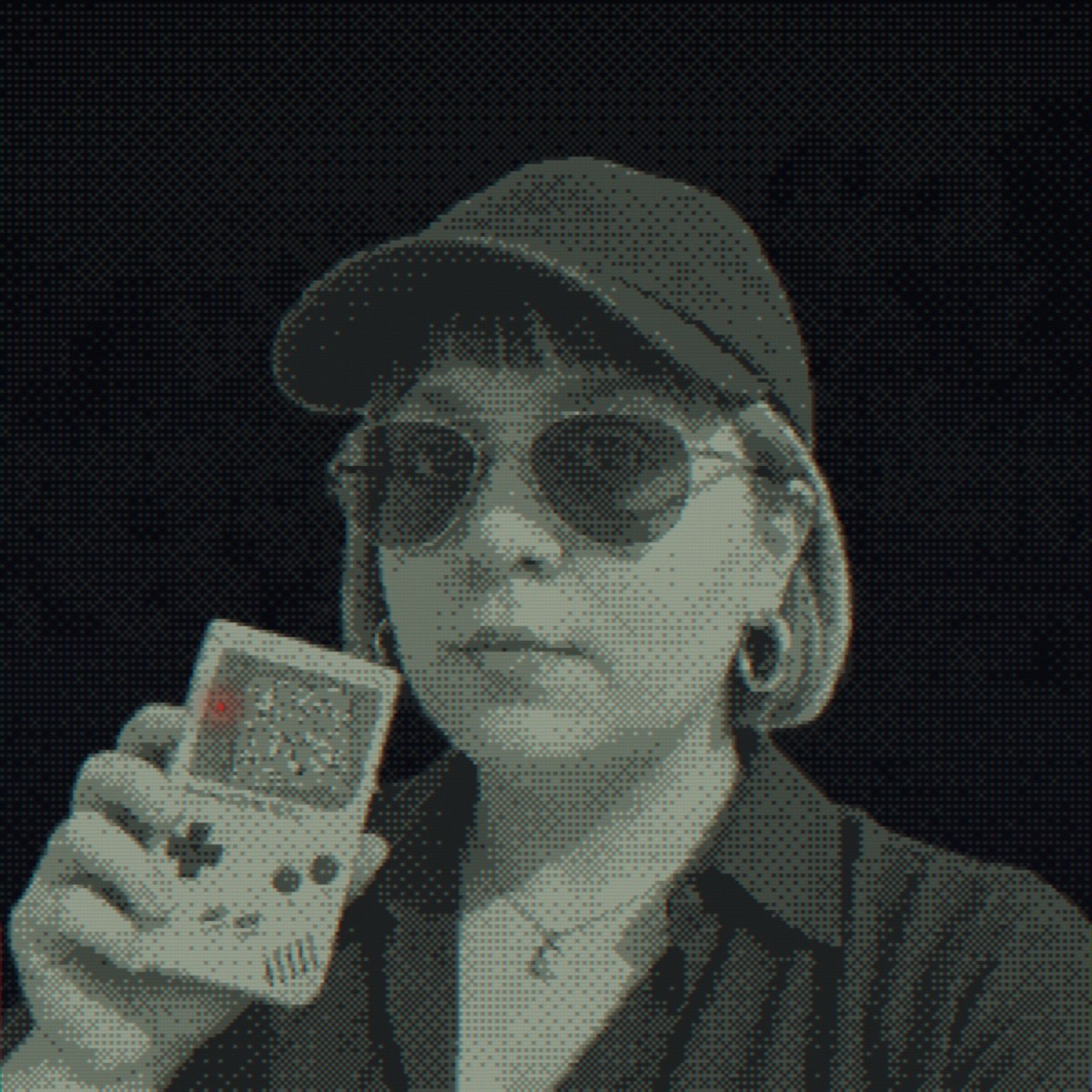
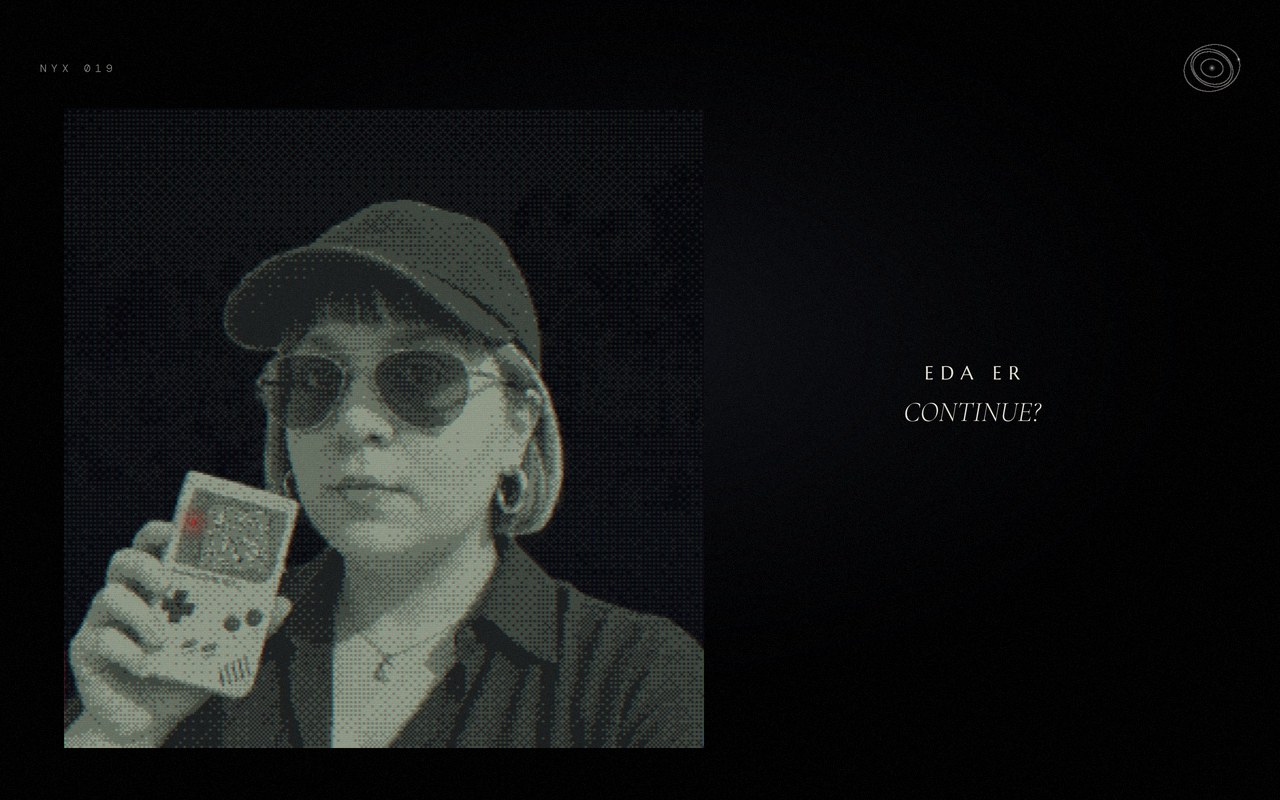
CONTINUE? by Eda Er: six pieces and one hidden file for Game Boy sound and voice, 19 minutes, 48 kHz / 24-bit. Voice, composition, sound and production by Eda Er; the Game Boy sound model, sequencing, mixing and mastering built in Python. Voice recorded at home in Strasbourg, summer 2026, no other samples. Cover: a photograph of Eda Er redrawn as a Game Boy screen. Released 14 September 2026.
Tracklist: 1. NEW GAME (2:09) · 2. POCKET GHOST (3:23) · 3. PLAYER TWO (3:15) · 4. CORRUPTED SAVE (2:59) · 5. LOW BATTERY (3:46) · 6. CONTINUE? (3:02) · 7. 000000.sav (0:43).
Also available at nyxphere.bandcamp.com.