An Organ Tuned to a Voice: Eda Er’s Soufflerie
Six registrations for organ and voice. 64 minutes, quadraphonic.
Soufflerie is the French word for the wind system of an organ: the blower, the trunks, the room where the instrument breathes. It is a good title for a record that has a great deal of wind in it and no organ at all. The instrument on these six pieces was built pipe by pipe in code, seventeen ranks of it, every pipe with its own harmonic series, its own permanent tuning error, its own turbulence and its own way of speaking. Then it was tuned. Not to a temperament out of a book, but to Eda Er’s voice.
The method is simple to state and strange to hear. Two hundred and sixteen held notes were measured out of her recordings and folded into twelve pitch classes. What came back was a temperament: octaves pure, fifths twelve cents wide, thirds eighteen cents wide, a minor second of ninety-two cents. Nobody decided any of this. It is simply where she puts her notes. Because the fifths are wide they beat, between one and four times a second depending on the register, and that beating is the only rhythm on the record. Kali Malone’s The Sacrificial Code, the obvious neighbour here, inherits its wolves from the meantone organs of Malmö and Stockholm. This one inherits them from a woman’s larynx.
The voice as a rank
Her voice is not a soloist over the organ. It is drawn on the instrument as a stop. A sung note is extended the way a pipe sustains, the steady middle of it looped forward and back so that the loop has no seam, and several separate recorded instances of the same note are sounded together the way several pipes of one rank sound together, so the rank’s undulation is her own intonation drifting from one take to the next. Nothing is transposed, resampled or corrected. She sings inside the chorus, never on top of it. The wind is her breathing: the floor under all six tracks is made from the breaths between her phrases, and the blower is never switched off.
Down in the pedal there is one more borrowed body. The 16′ reed was voiced from the trombone of Simon Sieger, her partner in äbädä, eighty-three sustained low notes measured out of the duo’s sessions and turned into a spectral envelope so the formant stays where a trombone keeps it. It is still synthesised, still in her temperament, and it is drawn gradually into all six pieces.
Jazz, held until it dissolves
What keeps this from being an exercise is the harmony. It is jazz: rootless thirteenths, quartal stacks, guide-tone tritones, the minor line cliché, a walking bass moving at one note a minute, voiced for an organ in her temperament and held until it gives way. Every chord change throws the room open and lets it dry again; the voices of a chord circle the building on their own slow orbits, spreading and meeting; in two of the pieces the reeds lean on the swell in a slow swung grid, long-short, the way a ballad organist’s hands do. The spacing rule of the record, no adjacent upper interval narrower than a fourth, turns out to be exactly the spacing pianists use for rootless voicings anyway. So the music got richer without getting rougher.
Six registrations
Each piece is named for the registration it is played on, and each is generated by a rule that is audible from the first minute and never broken. “Plein Jeu” is a chain of thirteen chords in which one voice moves at a time, twice through, the upperwork drawn one stop at a time on the second traversal. “Tierce en Taille” sets the old French solo in the tenor against the same fourteen notes in the pedal at exactly twice the length; the canon takes eleven minutes to come apart and never resolves. “Voix Céleste” is two string ranks five and a half cents apart and seven chords in eight and a half minutes.
“Fonds d’Orgue” lets the pedal walk down through the bottom of the instrument, one note every ninety seconds, so that the chord held above it is consonant, then wrong, then consonant again with nobody moving. “Récit de la Voix Humaine” leaves the organ’s own vox humana in its case and gives the solo to her; and because the notes she sang most are D, E, F, G, A, B flat and C sharp, this piece alone is in D. The mode is whatever her lungs have most of. “Grand Jeu” draws everything, tightens its harmony three times, and then puts the stops in one by one until a single pipe is left, and then that goes too, and what is still sounding is her.
The verdict
Organ records of this kind live or die on patience, and Soufflerie earns its sixty-four minutes because nothing in it ever holds still. The chords sag and recover, the ranks come and go, the beating speeds up and slows as the register changes, and underneath it all a person is breathing. The conceptual move, tuning the instrument to the singer instead of the singer to the instrument, is the kind of idea that could have stayed a footnote. Here it is the sound of the whole record: an organ that is slightly, permanently, humanly out of tune, and a voice that finally has an instrument built to its own measure.
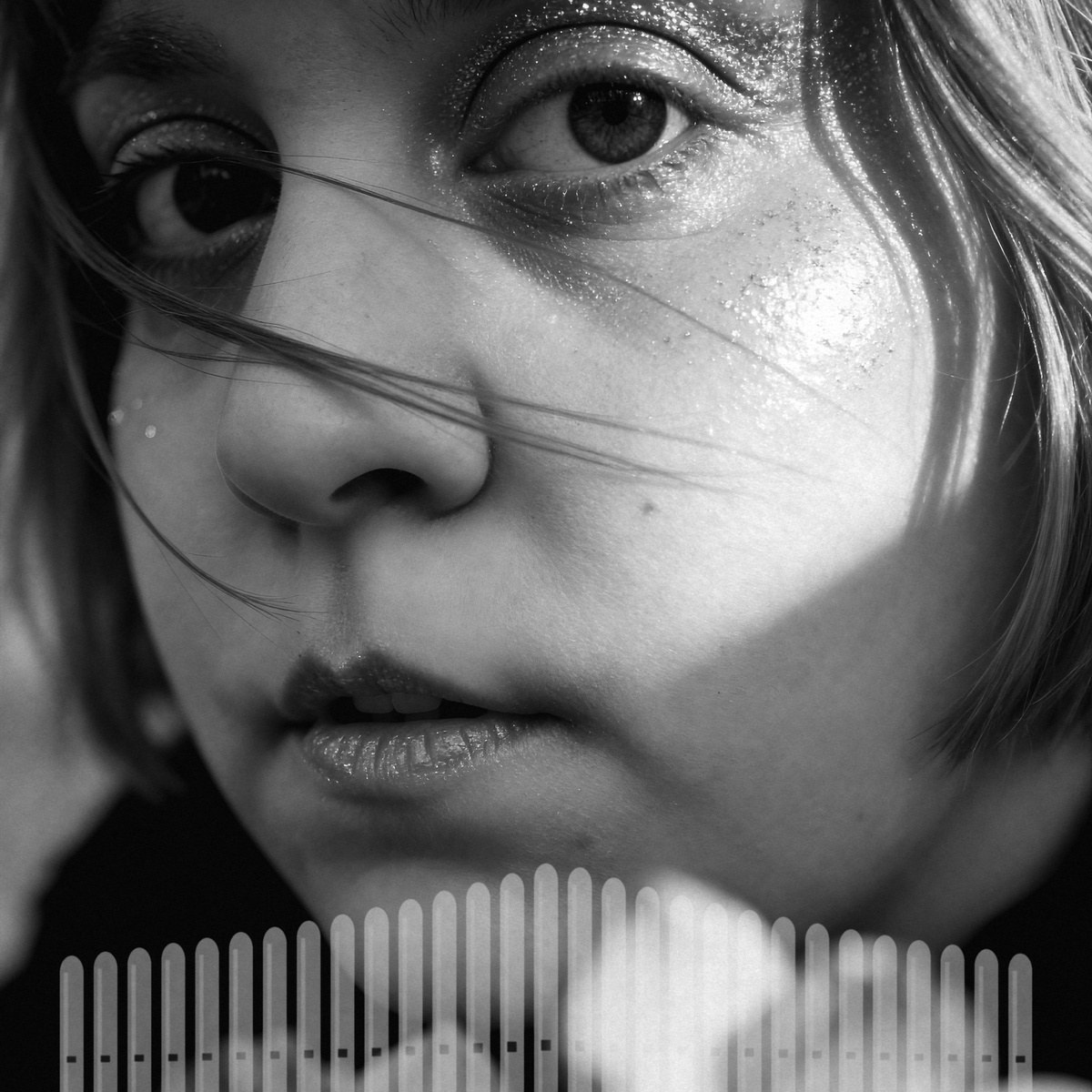
Soufflerie by Eda Er — six registrations for organ and voice, 64 minutes, quadraphonic 4.0 and stereo, 48 kHz / 24-bit. Composed, built, performed, mixed and mastered by Eda Er. All voice from the “Route des Romains” sessions, at natural pitch. Trombone 16′ voiced from the trombone of Simon Sieger. Cover photograph: Eda Er. Released 1 September 2026.
Tracklist: 1. Plein Jeu (9:09) · 2. Tierce en Taille (11:32) · 3. Voix Céleste (8:39) · 4. Fonds d’Orgue (12:09) · 5. Récit de la Voix Humaine (10:39) · 6. Grand Jeu (11:56).
Also available at nyxphere.bandcamp.com.